
top of page
Relief Background.jpg

BLOG
Expert Information on Asbestos, Mould, Water Damage, Health & More

Our blog offers expert insights, practical advice, and useful tips on asbestos, mould, water damage, & other key restoration services & health topics to help safeguard your property & well-being.

Categories:

For Great Tips, Information & Excusive Offers!

Receive a FREE Download When You Subscribe! Click Subscribe ^ for More Info

Relief Background.jpg

Why Water Damage Smells Even After Everything Looks Dry (And What’s Really Causing It)

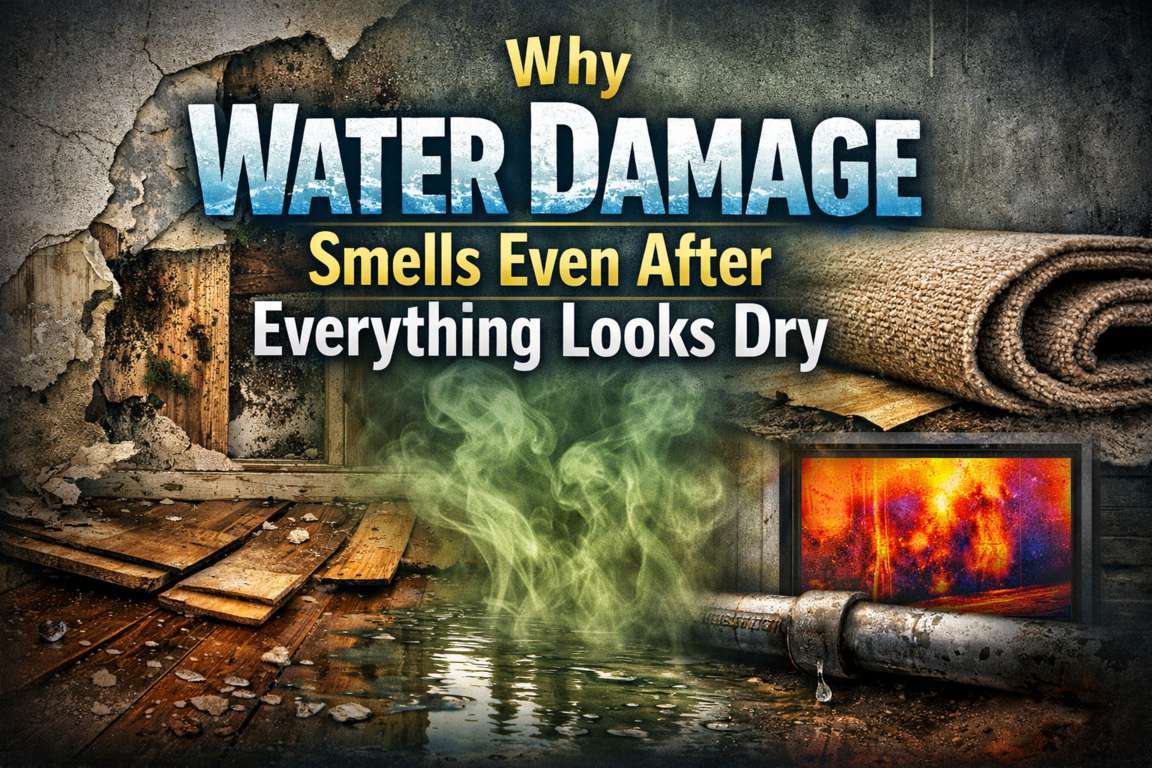
Why water damage smells even after everything looks dry - post image

Introduction: Why the Smell Doesn’t Match What You See

One of the most common frustrations homeowners experience after a leak or flood is this, everything looks dry, but the smell is still there. Floors feel solid, walls look clean, and fans may have been running for days, yet a musty, sour, or earthy odour lingers in the space. Many people assume this smell will fade on its own with time or fresh air, but in reality, it is often a warning sign that something beneath the surface was never fully addressed.


When water damage occurs, moisture does not always stay where you can see it. It moves into wall cavities, under flooring, and deep into porous building materials. Even when surfaces appear dry, hidden moisture can remain trapped and begin to break down materials or support microbial activity. The smell is not just unpleasant, it is often the first indicator that drying was incomplete or that secondary damage has already started.


Understanding why odours persist after water damage helps homeowners avoid quick fixes that fail and make informed decisions about proper drying, treatment, and long-term protection of their home.


What That Musty or Sour Smell Is Actually Coming From

That lingering odour is not caused by “stale air” or leftover humidity alone. In most cases, it is the result of microbial growth and material breakdown triggered by moisture. When water enters a building, it creates ideal conditions for bacteria and mould to begin developing, often within 24 to 48 hours.


As microbes grow, they release microbial volatile organic compounds (MVOCs). These gases are responsible for the musty, damp, or sour smells commonly associated with water damage. Even small amounts of hidden growth can produce noticeable odours, long before mould becomes visible on surfaces.


In addition to microbial activity, wet building materials themselves can contribute to lingering smells. Damp drywall, wood, insulation, and flooring adhesives can off-gas as they slowly dry, especially if moisture remains trapped inside. This is why odours may actually become stronger days or even weeks after the initial water event, particularly when heating systems are turned back on or humidity levels change.


The key point is this, if a space smells like water damage, there is usually still a moisture-related issue present somewhere in the structure. Masking the smell does not remove the source, and without addressing what is causing it, the odour often returns.


Microbial Growth Starts Before You Can See It

One of the biggest misconceptions about water damage is that mould or bacterial growth only becomes a concern once it is visible. In reality, microbial growth often begins well before there are any obvious signs. When moisture is introduced into a building, bacteria and mould spores that are already present in the environment can begin to activate within 24 to 48 hours.


Early-stage microbial growth is usually hidden. It can develop on the backside of drywall, inside wall cavities, beneath flooring, or within insulation. At this stage, there may be no visible mould, no staining, and no obvious surface damage. The only clue something is wrong is often the smell. Those musty or sour odours are frequently the first indication that microbes are active and releasing gases into the indoor air.


Because microbial growth starts out of sight, relying on visual checks alone can give a false sense of security. By the time mould becomes visible, the problem has typically progressed and may involve a larger area, additional material removal, and more extensive remediation.


Trapped Moisture in Hidden Areas

Water rarely stays confined to the area where it first appears. Once it enters a structure, it follows gravity, capillary action, and air movement, spreading into spaces that are difficult or impossible to see without proper tools. This is how moisture becomes trapped even when surfaces feel dry.


Common hidden areas where moisture lingers include wall cavities, subfloors beneath finished flooring, insulation, cabinets, and framing components. These spaces can hold moisture for extended periods, especially if drying efforts focus only on visible surfaces. In some cases, moisture becomes sealed in when walls are closed up or new flooring is installed too soon.


Trapped moisture creates a stable environment for ongoing microbial activity and material deterioration. As long as moisture remains, odours will continue to be released into the living space, even if the original leak or flood has long been resolved.


Porous Materials Hold Moisture and Odours

Many common building materials are porous, meaning they readily absorb and retain water. Drywall, wood, insulation, carpet, underlay, and even some types of flooring and adhesives can act like sponges when exposed to moisture. While the surface of these materials may dry quickly, moisture can remain locked inside their structure.


As these materials slowly release moisture over time, they also release odours that were absorbed during the water damage event. This is why a room can continue to smell musty even after thorough cleaning or surface drying. In some cases, repeated wetting and drying cycles make odours stronger as materials begin to break down.


Porous materials that remain damp for too long may never fully recover. When drying and treatment are delayed or incomplete, replacement may be the only effective way to permanently eliminate both the moisture and the odour source.


Why Fans and Open Windows Aren’t Enough

After a water incident, many homeowners rely on fans, open windows, or portable heaters to dry out the space. While air movement can help evaporate surface moisture, it does very little to address moisture that has moved into hidden or dense materials. This is where many drying efforts fall short.


Fans move air, but they do not remove moisture from the air itself. Without proper dehumidification, evaporated moisture simply stays in the environment and can be reabsorbed by surrounding materials. In colder months, opening windows can actually introduce more moisture or slow drying due to temperature differences, especially in Manitoba’s climate.


Proper drying requires measuring moisture levels inside materials, not just checking how things feel to the touch. Moisture meters and thermal imaging are used to locate damp areas behind walls, under floors, and inside assemblies. Without this verification, water damage can remain active even though the space looks dry, allowing odours and microbial growth to continue.


Why Water Damage Odours Come Back After Cleaning

A common experience for homeowners is cleaning the affected area, only to have the smell return days or weeks later. This happens because cleaning addresses the symptom, not the source. Wiping surfaces, shampooing carpets, or repainting walls may temporarily reduce odours, but it does not remove moisture trapped inside materials.


Paint, flooring, or sealants can even make the problem worse by locking moisture into walls or subfloors. Once sealed in, that moisture continues feeding microbial activity, and odours eventually find their way back into the living space through gaps, electrical outlets, or air movement.


If odours return after cleaning or cosmetic repairs, it is often a sign that underlying water damage was never fully dried or treated. Until the moisture source is eliminated and affected materials are properly addressed, smells are likely to persist.


How Professional Drying Solves the Root Problem

Professional water damage mitigation focuses on controlling the environment, not just drying surfaces. This involves creating the right balance of air movement, temperature, and dehumidification to remove moisture from both the air and the building materials themselves.


A proper drying process starts with moisture mapping to identify affected areas, including hidden spaces. Drying equipment is then strategically placed to target those areas, and moisture levels are monitored throughout the process to ensure materials are returning to safe, dry conditions. Drying is not complete until moisture readings confirm it.


By addressing moisture at its source, professional drying prevents secondary damage, reduces the risk of microbial growth, and eliminates the conditions that cause lingering odours.


Antimicrobial Treatment and Odour Control

In cases where microbial activity has already started, drying alone may not be enough. Antimicrobial treatments are used to address bacteria and mould on affected materials, helping stop odour production at its source. These treatments are applied after proper drying to ensure they are effective and not diluted by remaining moisture.


Odour control is about neutralization, not masking. Professional methods target the compounds responsible for smells rather than covering them up with fragrances. In some situations, materials that are heavily contaminated or deteriorated may need to be removed to fully resolve the issue.


When water damage odours are properly treated through drying, antimicrobial application, and, where necessary, material removal, the smell does not come back. This approach protects indoor air quality and ensures the problem is fully resolved rather than temporarily hidden.


When Lingering Odours Mean You Should Call a Professional

Not every water-related smell means extensive damage, but persistent or recurring odours should never be ignored. In many cases, smell is the clearest indicator that water damage was not fully addressed, even if the original issue appeared minor.


You should consider professional assessment if odours last more than a few days after drying efforts, return after cleaning or repairs, or become stronger during changes in temperature or humidity. Other warning signs include visible staining, warping, bubbling paint, or health symptoms such as headaches, congestion, or irritation when spending time in the affected area.


Homes that experienced leaks, flooding, or plumbing failures without proper moisture mapping and drying are especially at risk. A professional inspection can identify hidden moisture, determine whether microbial growth is present, and recommend the appropriate next steps before the problem worsens.


Conclusion: Smell Is a Symptom, Not the Problem

When a space smells musty after a leak or flood, the odour itself is not the issue, it is a signal. Lingering smells usually indicate unresolved water damage, trapped moisture, or early microbial activity hidden within the structure. Ignoring those signs or attempting surface-level fixes often leads to recurring problems, increased repair costs, and potential health concerns.


Addressing water damage properly means identifying where moisture travelled, confirming materials are fully dry, and treating or removing affected components when necessary. When the source is handled correctly, odours do not return.


If your home smells damp even though everything looks dry, it is worth having it assessed. Catching the issue early helps protect your indoor air quality, prevent further damage, and ensure the space is truly restored, not just dried on the surface.


Contact Relief Restorations Today

Schedule a mould air test, moisture survey, asbestos testing, remediation, inspection or consultation with our team to ensure your home is protected. Let us help you safeguard your home and restore peace of mind, knowing that you’re in good hands.


Our Services Include:

Water Damage – Restoration | Content Services | Moisture Surveys

Fire & Smoke Damage – Restorations | Content Services | Odour Removal

Mould – Remediation | Air Testing | Fogging | Inspections

Asbestos – Remediation | Testing | Inventories | Inspections

Non-Structural Demolition Services


Other Services:

Contents Services – Packout | Packback | Cleaning | Restoration | Odour

Ceiling Stipple Removal

Vermiculite Removal


We Want to Hear From You!

Have you ever dealt with hidden odours? Share your experience in the comment section below; your insights could help others.


If you found this post helpful, don't forget to like & share it with your friends and family to spread the word.


Stay Informed - Subscribe

Subscribe to our blog and newsletter at the top or bottom of this page for tips, information, exclusive offers, and more expert advice on property maintenance, mould prevention, and other restoration, remediation and health tips to keep your home or property safe and healthy.


About Relief Restorations

At Relief Restorations, we specialize in providing comprehensive restoration services, including mould remediation, water damage restoration, fire and smoke damage restoration, asbestos removal, light demolition, inspection and testing services across Winnipeg and Manitoba, Canada.


With a focus on safety and quality, our expert team is dedicated to restoring your property and ensuring a healthier living environment. Whether you're a homeowner, business, tenant, landlord, or property manager, you can trust us to handle any restoration or remediation challenge with professionalism and care.


Contact us today to learn more about how we can help protect your property.


Please note: The information on this post and website are for entertainment and educational purposes only and does not replace professional inspection or remediation services or offer legal or medical advice.


Comments


Relief Background.jpg

You May Also Like:

bottom of page