
Relief Restorations
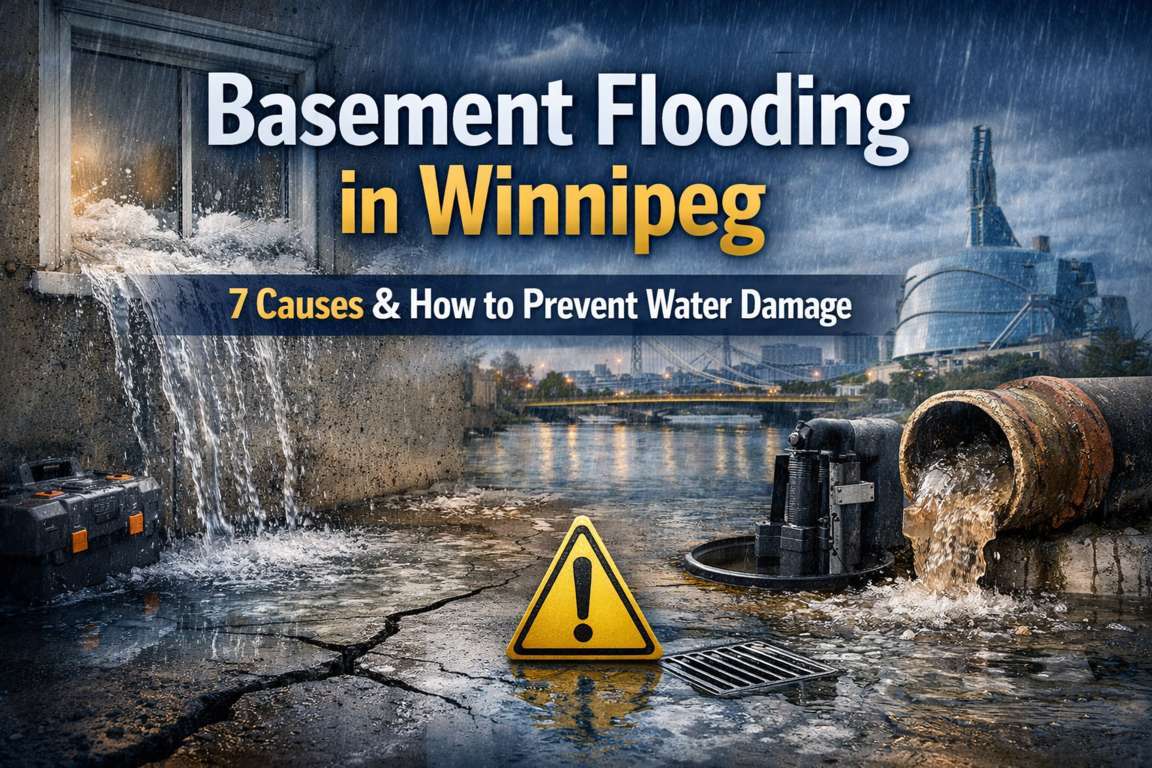
Basement Flooding in Winnipeg: 7 Common Causes and How to Stop Water Damage Before It Starts
Basement flooding is one of the most common and frustrating problems Winnipeg homeowners face. The region's extreme seasonal shifts, freeze-thaw cycles, and aging infrastructure amplify water intrusion risks throughout the year.
Why Basement Flooding Is So Common in Winnipeg
Flooding rarely stems from a single cause. Winnipeg's geography creates specific flood vulnerabilities: extreme seasonal shifts that stress building materials, rapid spring snowmelt that overwhelms drainage systems, freeze-thaw cycles that crack foundations, and aging infrastructure in many established neighbourhoods.
The 7 Most Common Causes of Basement Flooding
1. Foundation cracks and porous concrete that allow ground moisture to seep in.
2. Poor exterior grading and downspout drainage directing water toward the foundation.
3. Sewer backups during heavy rain overwhelming the municipal system.
4. Sump pump failure during peak demand periods.
5. Spring melt with frozen soil that cannot absorb water quickly enough.
6. Window well leaks from inadequate covers or poor drainage.
7. Internal plumbing failures including burst pipes, failed appliances, and water heater leaks.
Warning Signs Your Basement Is at Risk
Early indicators include musty odours, efflorescence (white mineral deposits) on walls, peeling paint, damp carpeting, condensation buildup, and water stains at the floor-wall junction. Any of these signs suggest moisture intrusion requiring investigation before the next wet season. See our FAQ for common questions about basement moisture.
How to Prevent Basement Flooding
Test and maintain your sump pump annually with a battery backup for power outages. Improve grading and extend downspouts at least 3 to 5 feet from the foundation. Test your backwater valve regularly. Inspect and seal foundation cracks. Clear gutters and drainage channels before the spring thaw.
Why Hidden Moisture Is the Real Long-Term Risk
Surfaces can feel dry while moisture remains within wall cavities or beneath flooring, creating conditions for mould growth and structural damage. Professional moisture mapping using thermal imaging and calibrated meters identifies hidden dampness that visual inspection misses completely.
Need professional help?
Our certified team is available 24/7 for emergency response and free consultations across Winnipeg and Manitoba.
Get Restoration Tips & Guides
Join Manitoba homeowners and property managers who receive our seasonal maintenance tips, restoration guides, and industry updates. No spam - unsubscribe anytime.