
Relief Restorations
The Hidden Health Risks of Musty Odours: What Mould and MVOCs Mean for Your Home
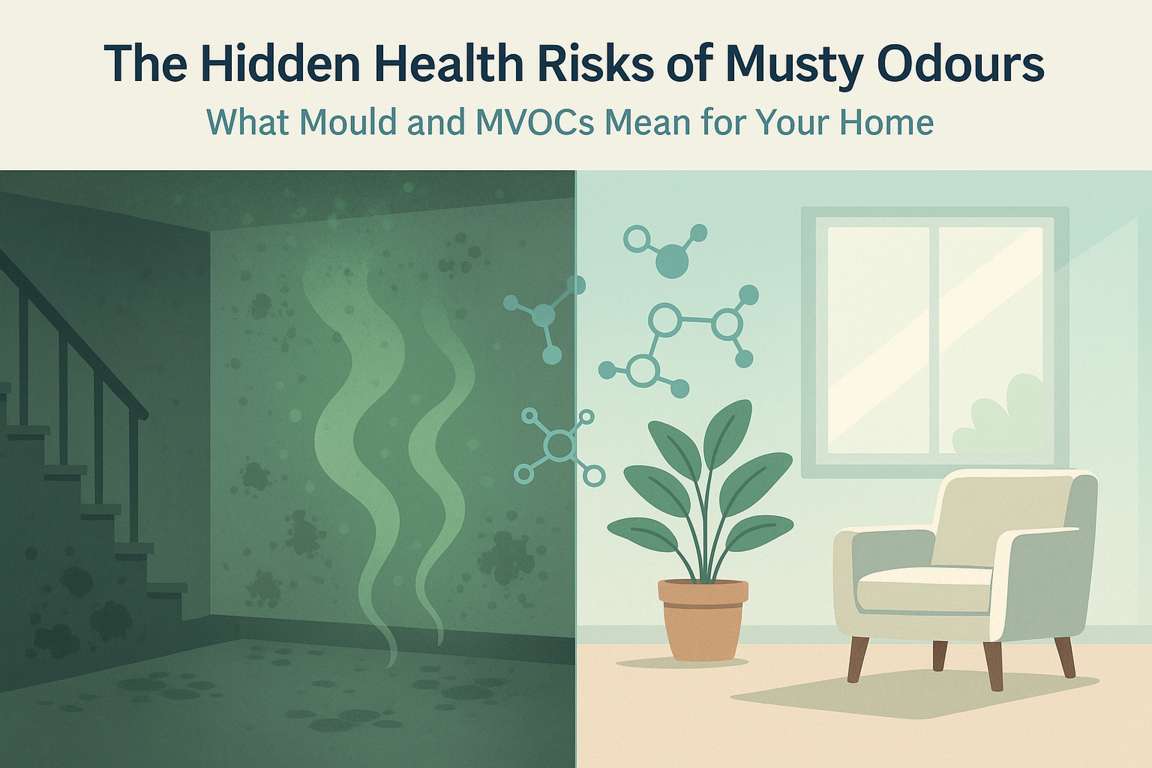
That recognizable musty smell in damp areas signals mould is present and actively releasing gases known as microbial volatile organic compounds (MVOCs). Ignoring these odours risks both property damage and respiratory health.
What Are MVOCs?
When mould grows, it releases gases as it digests organic material such as wood, drywall, or paper backing on insulation. These microbial volatile organic compounds (MVOCs) are biological in origin and differ from chemical VOCs found in paints or cleaners. They remain present in indoor air even when mould is hidden behind walls or under floors.
How MVOCs Affect Indoor Air Quality
These gases mix easily with indoor air and can travel far beyond the original contamination site, degrading air quality throughout entire homes. MVOCs are responsible for the musty, earthy, or damp smells commonly associated with mould-affected spaces. Their presence indicates active mould growth even when growth is not visible.
Health Risks of MVOCs
Exposure can cause immediate symptoms including sneezing, eye irritation, headaches, and throat discomfort. Chronic exposure - particularly for children, elderly individuals, and those with respiratory conditions - may trigger more serious consequences including worsened asthma, persistent respiratory symptoms, and inflammatory responses.
Where Do Musty Odours and MVOCs Come From?
Problem areas include basements, bathrooms, attics, and spaces behind walls where moisture, organic building materials, and poor ventilation enable mould to establish and proliferate. Musty odours from these areas should always be investigated rather than masked with air fresheners.
How to Address MVOCs and Mould Odours
Professional mould remediation involves locating moisture sources, removing mould-affected materials, drying structural components, and improving indoor air quality through HEPA air scrubbers and negative air machines. Masking odours with deodorizers does not address the underlying contamination and allows mould growth to continue.
Conclusion
Early recognition of musty odours as a warning sign and prompt professional assessment protect homes and occupants from the health complications associated with persistent microbial contamination. Contact Relief Restorations for a professional mould inspection and mould air testing.
Need professional help?
Our certified team is available 24/7 for emergency response and free consultations across Winnipeg and Manitoba.
Get Restoration Tips & Guides
Join Manitoba homeowners and property managers who receive our seasonal maintenance tips, restoration guides, and industry updates. No spam - unsubscribe anytime.