
Relief Restorations
How to Read Your Mould Air Test Results: A Homeowner's Guide to Lab Reports in Winnipeg
Receiving a mould air test lab report can be stressful, especially when the terminology is unclear. This guide explains how to read lab results, what spore counts mean, and what steps to take next.
Why Mould Lab Reports Are Confusing
Most lab reports are written for inspectors and professionals trained in mould terminology, not for homeowners. They contain scientific names, spore counts, abbreviations, and technical notes that are difficult to interpret without specialized experience.
What This Report Is Actually Telling You
Mould test results are not a diagnosis on their own. They are a snapshot of airborne spore levels at the time and location of sampling. Results must be interpreted in context with building conditions, moisture history, and a physical inspection.
What Is an Unoccupied Space?
An unoccupied space is any area of a building that is not regularly used as a living or working space and is not intended for daily occupancy. Attics, crawlspaces, and mechanical rooms are common examples.
What Is a Mould Air Test and When Is It Useful
Air testing is useful when hidden mould growth is suspected, such as with persistent musty odours, history of water damage, or unexplained health symptoms that worsen indoors. It quantifies airborne spore levels and identifies mould species present at the time of sampling.
How to Read the Lab Report Step by Step
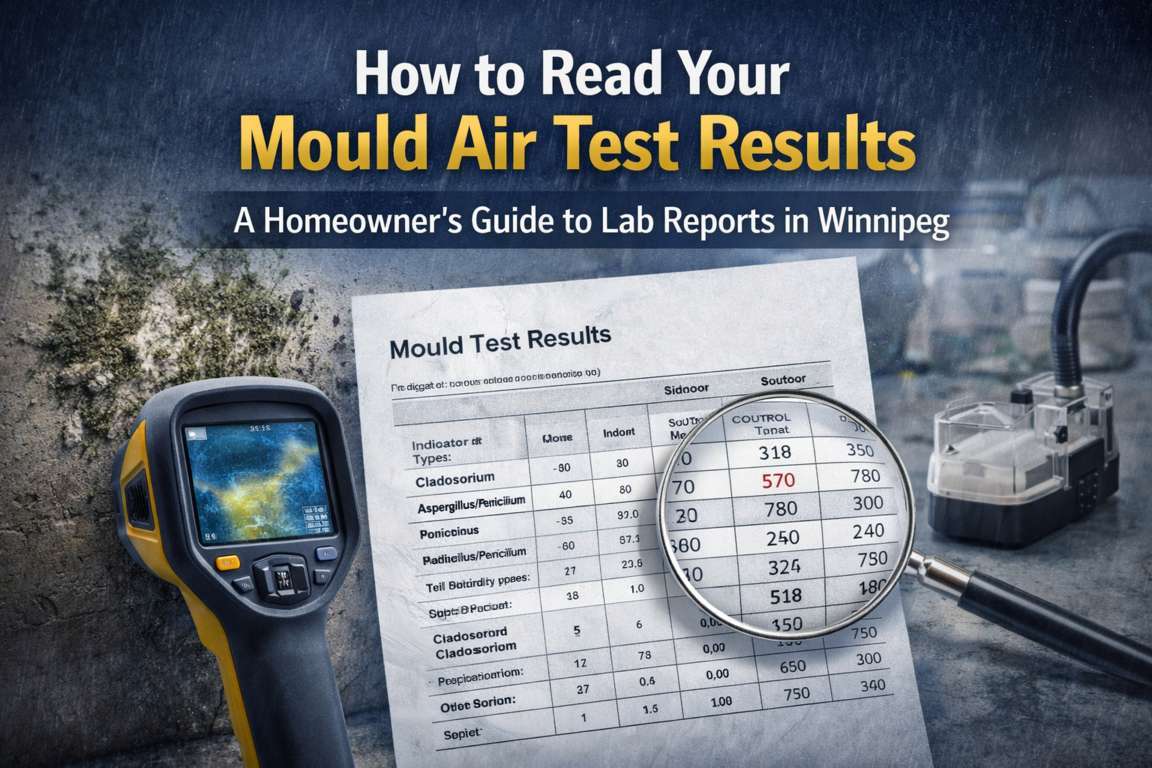
Lab reports show where samples were taken, what mould types were identified, and how many spores were detected in each area. Key columns include sample location, mould genus/species, raw count, and spores per cubic metre. An outdoor control sample is critical - it establishes baseline outdoor levels for comparison with indoor results.
What Different Mould Spore Types Generally Indicate
Not all mould spores mean the same thing. Cladosporium and Basidiospores are primarily outdoor moulds and their presence is expected. Stachybotrys, Chaetomium, and Aspergillus/Penicillium at elevated indoor levels are more closely associated with damp or water-damaged building materials.
What Are Black Moulds?
'Black mould' is a non-technical term describing dark-coloured mould growth and does not refer to a single species. Multiple mould types appear dark or black. Stachybotrys chartarum is the mould most commonly associated with this term and requires sustained moisture to establish growth.
What Is Considered Normal Versus a Concern
There is no universal safe or unsafe number for mould spores. Indoor levels should generally be similar to or lower than outdoor levels for common outdoor moulds. Elevated indoor levels of water-damage-indicator species, or indoor levels significantly exceeding outdoor baseline levels, indicate potential concerns requiring follow-up.
Common Misinterpretations of Mould Air Test Reports
One common misunderstanding is assuming low numbers mean no mould problem. Air samples are taken at a single point in time and may miss spores released at other times or in other areas. Another misinterpretation is treating any mould detection as an emergency - context and species matter significantly.
What to Do After You Receive Your Mould Test Results
Once results are received, the next step is interpreting them in context. If results suggest indoor mould amplification, focus should shift to identifying the moisture source and affected materials. Address moisture first - without moisture control, mould will return regardless of remediation efforts.
When to Seek Professional Guidance in Winnipeg
Professional interpretation is especially important if anyone in the household experiences respiratory symptoms, persistent odours are present, visible growth is detected, or there is a history of water damage. A certified mould inspector can correlate lab results with physical inspection findings.
Common Terms and Definitions for Reference
Air sample: collected using a spore trap cassette at a measured volume. Swab/tape lift: surface sampling for visible growth. Bulk sampling: physical material removed for analysis. Control sample: outdoor baseline for comparison. Spores per cubic metre: normalized measurement for comparing results. Indoor amplification: indoor species present at levels exceeding outdoor baseline.
Why a Mould Inspection Comes First or Should Happen at the Same Time
A mould inspection provides critical context that air testing alone cannot. Visual inspection identifies visible mould growth, water staining, and building defects. Moisture readings locate wet areas. Thermal imaging can reveal hidden moisture behind surfaces. Air testing without physical inspection produces results that are very difficult to interpret correctly.
Why DIY Mould Test Kits and Some Testing Methods Are Limited
DIY mould test kits often provide misleading results because they lack outdoor control samples and cannot be interpreted in context with building conditions. They collect whatever settles over time rather than a calibrated air volume, making comparison with professional standards impossible.
Conclusion and Practical Next Steps
Mould air testing is useful as part of a broader assessment process, not as a standalone diagnostic tool. Identifying and correcting moisture sources is the most important step in addressing mould concerns. If your results raise questions, contact Relief Restorations for professional interpretation and a comprehensive mould inspection.
Need professional help?
Our certified team is available 24/7 for emergency response and free consultations across Winnipeg and Manitoba.
Get Restoration Tips & Guides
Join Manitoba homeowners and property managers who receive our seasonal maintenance tips, restoration guides, and industry updates. No spam - unsubscribe anytime.