
Relief Restorations
What Is an Asbestos Containment Area and How Does It Keep Us Safe?
A properly constructed asbestos containment area is the foundation of safe abatement. Learn the key components that prevent fibre release and protect building occupants during remediation.
Aspects of a Safe Containment
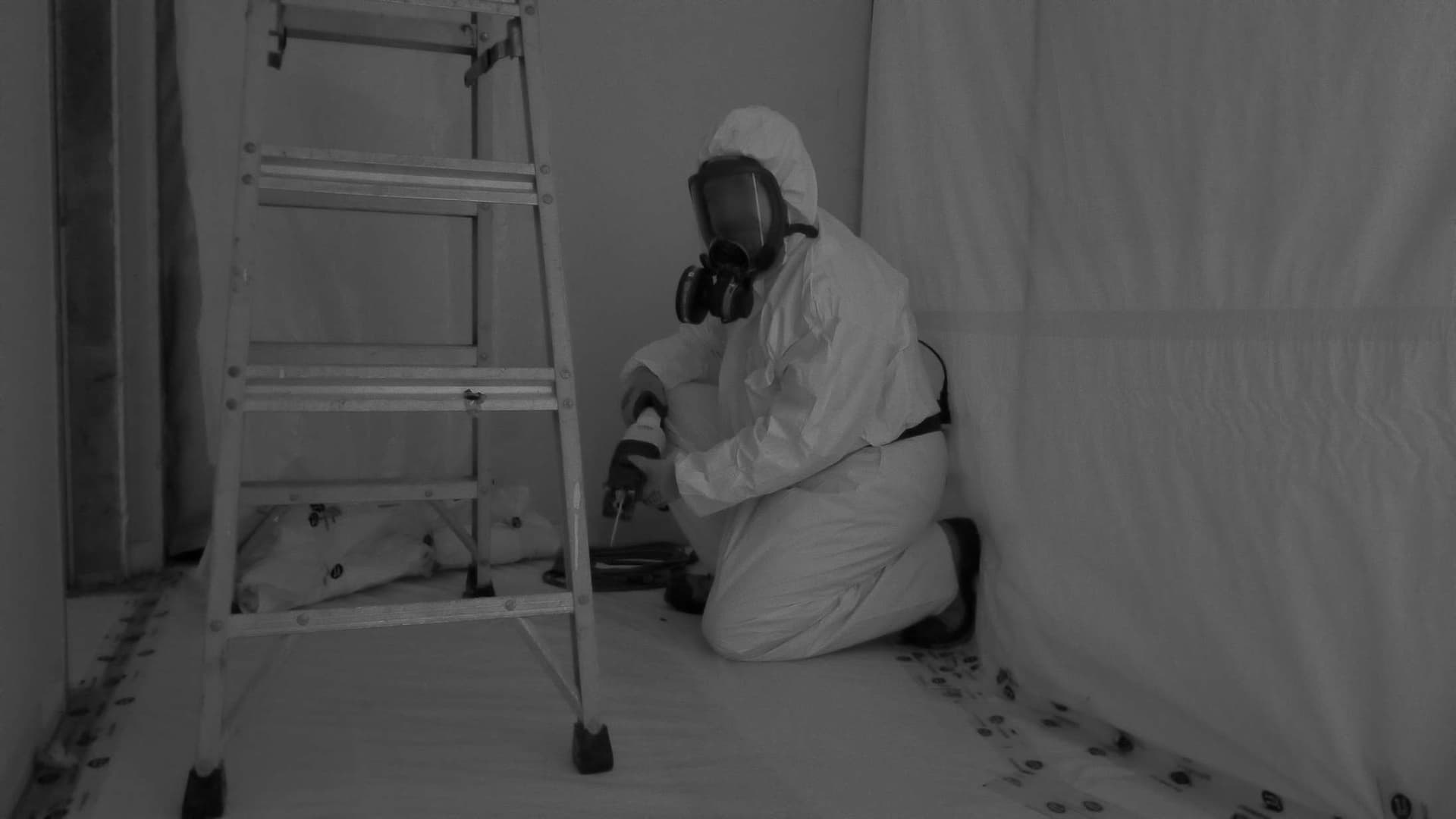
A properly constructed asbestos containment area uses multiple layers of protection to prevent fibre release beyond the work zone. It is an essential part of every asbestos abatement project.
Poly Sheeting on Walls, Fixtures, and Flooring
Heavy polyethylene sheeting is applied to all surfaces within the work area including walls, floors, light fixtures, HVAC vents, and doorways. This creates a sealed environment that prevents asbestos fibres from contaminating the rest of the building. The sheeting is secured with tape and overlapped to eliminate gaps.
Negative Air Machine
A large air mover equipped with HEPA filtration continuously runs within the containment to trap asbestos fibres and maintain negative air pressure. Negative pressure means air is always flowing into the containment rather than out, preventing fibre-laden air from escaping into clean areas of the building.
Decontamination Chambers
Decontamination chambers are three-room structures - Clean, Shower, and Dirty rooms - that allow workers to safely pass between the contaminated work area and clean areas without transferring fibres. Workers remove contaminated clothing and equipment in the dirty room, shower in the middle room, and dress in clean clothing in the clean room.
Manometer
A manometer continuously monitors the air pressure differential between the containment area and the surrounding building. This instrument confirms that the negative air machine is functioning properly and that the containment maintains the required negative pressure throughout the project.
Air Testing
Air monitoring using calibrated cartridge-based testing equipment measures fibre concentration levels inside and outside the containment. Clearance testing is conducted by an independent third-party technician at the completion of the project to confirm that fibre levels are below regulatory limits before containment is removed. Have questions? Visit our FAQ or contact us.
Signage
Mandatory asbestos warning signs are placed at all access points to the containment area. These signs restrict unauthorized entry during active remediation work.
Glove Bag Method
For pipe and duct sections, a glove bag - a sealed poly bag with integrated gloves - allows safe removal of asbestos insulation in tight spaces without establishing a full containment area. The worker's hands enter through the integrated gloves and all work occurs within the sealed bag environment.
Need professional help?
Our certified team is available 24/7 for emergency response and free consultations across Winnipeg and Manitoba.
Get Restoration Tips & Guides
Join Manitoba homeowners and property managers who receive our seasonal maintenance tips, restoration guides, and industry updates. No spam - unsubscribe anytime.