Relief Restorations
Understanding IICRC Standards: Why They Matter After Water, Fire, or Mould Damage
Homeowners often encounter IICRC certified claims without understanding their significance. These standards ensure systematic, documented approaches to restoration that protect your property from secondary damage and your health from ongoing exposure.
What Are IICRC Standards?
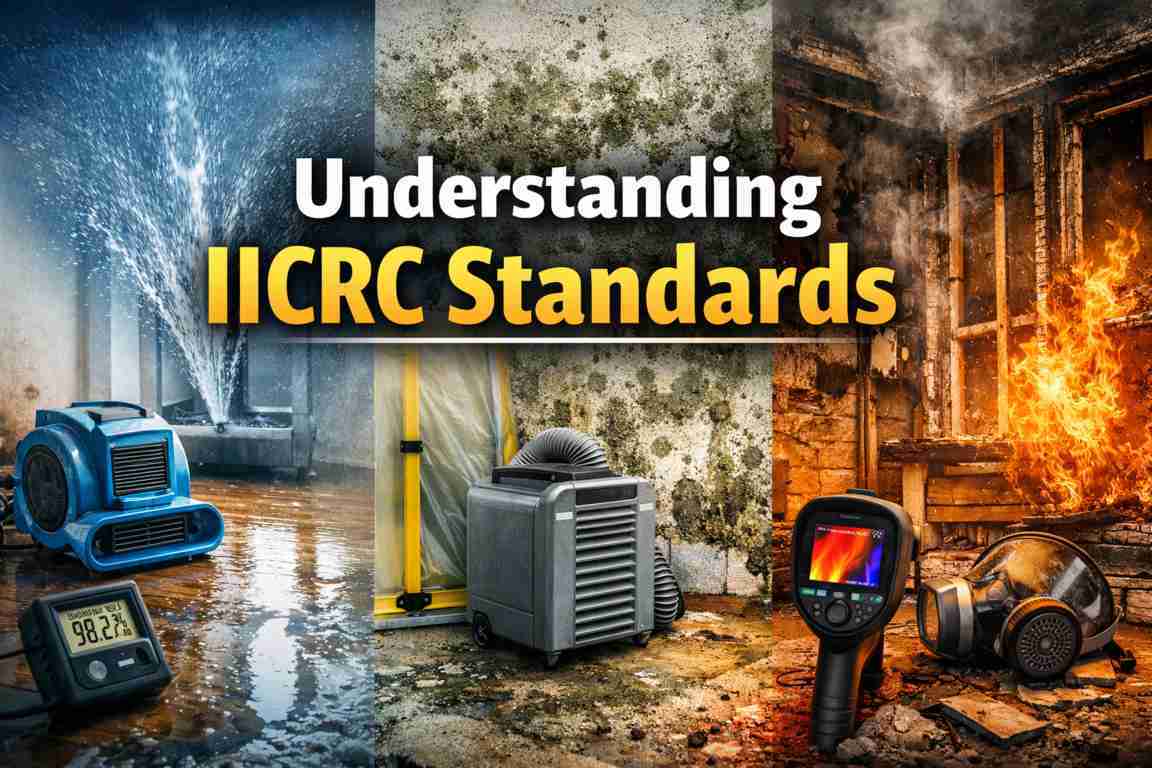
The Institute of Inspection Cleaning and Restoration Certification develops technical guidelines for property damage restoration. The three most relevant for homeowners are: S500 addressing water damage restoration, S520 covering mould remediation, and S700 providing fire and smoke damage restoration procedures.
Why IICRC Standards Matter for Homeowners
Standards ensure systematic approaches using diagnostic tools rather than assumptions. They incorporate safety containment procedures that protect both workers and occupants. Certified work maintains documentation that supports insurance claims and protects against liability. Standards-based restoration provides long-term building protection against secondary damage like mould and structural deterioration.
IICRC Standards in Water Damage Restoration
S500 outlines moisture mapping using calibrated meters and thermal imaging, water categorization (clean, grey, or black water), strategic equipment placement for maximum drying efficiency, and regular monitoring with documented readings at every check. Homes dried to S500 standards have documented proof of complete drying for insurance and future sale purposes.
How Standards Guide Mould Remediation
S520 emphasizes containment barriers with negative air pressure to prevent spore spread, safe removal of heavily contaminated materials, HEPA filtration throughout the remediation process, and post-remediation verification testing to confirm clearance before containment is removed.
Fire and Smoke Damage Restoration Standards
S700 addresses smoke residue assessment and categorization, specialized cleaning techniques matched to specific residue types (wet smoke, dry smoke, protein smoke), and odour removal protocols using thermal fogging or hydroxyl generators based on contamination characteristics.
How to Identify Companies That Follow IICRC Standards
Look for individual technician certifications including Water Restoration Technician (WRT), Applied Microbial Remediation Technician (AMRT), and Fire and Smoke Restoration Technician (FSRT). Ask for detailed inspection procedures with documentation and request to see the equipment they plan to use. View our certifications to see how Relief Restorations qualifies.
Risks of Hiring Contractors Who Ignore Industry Standards
Improper drying procedures create hidden moisture problems that lead to mould months later. Inadequate mould containment spreads spores throughout the building. Incorrect fire cleaning using wrong chemistry permanently damages surfaces and allows odours to return. Non-compliant work also creates documentation gaps that complicate insurance claims.
Need professional help?
Our certified team is available 24/7 for emergency response and free consultations across Winnipeg and Manitoba.
Get Restoration Tips & Guides
Join Manitoba homeowners and property managers who receive our seasonal maintenance tips, restoration guides, and industry updates. No spam - unsubscribe anytime.