Relief Restorations
Understanding Different Types of Smoke Damage: Wet, Dry, Protein, Plastic, Fuel Oil
Not all smoke damage is the same. Each type of residue from wet smoke to protein smoke requires a completely different cleaning approach. Using the wrong method makes the damage worse.
What Is Smoke Damage?
Smoke damage results from incomplete combustion, combining gases, aerosols, and solid particulates that contaminate building surfaces, HVAC systems, and contents. The specific fuel material and fire conditions determine the type of residue produced and the cleaning chemistry required. Our fire and smoke damage restoration team is trained in all residue types.
Wet Smoke Damage
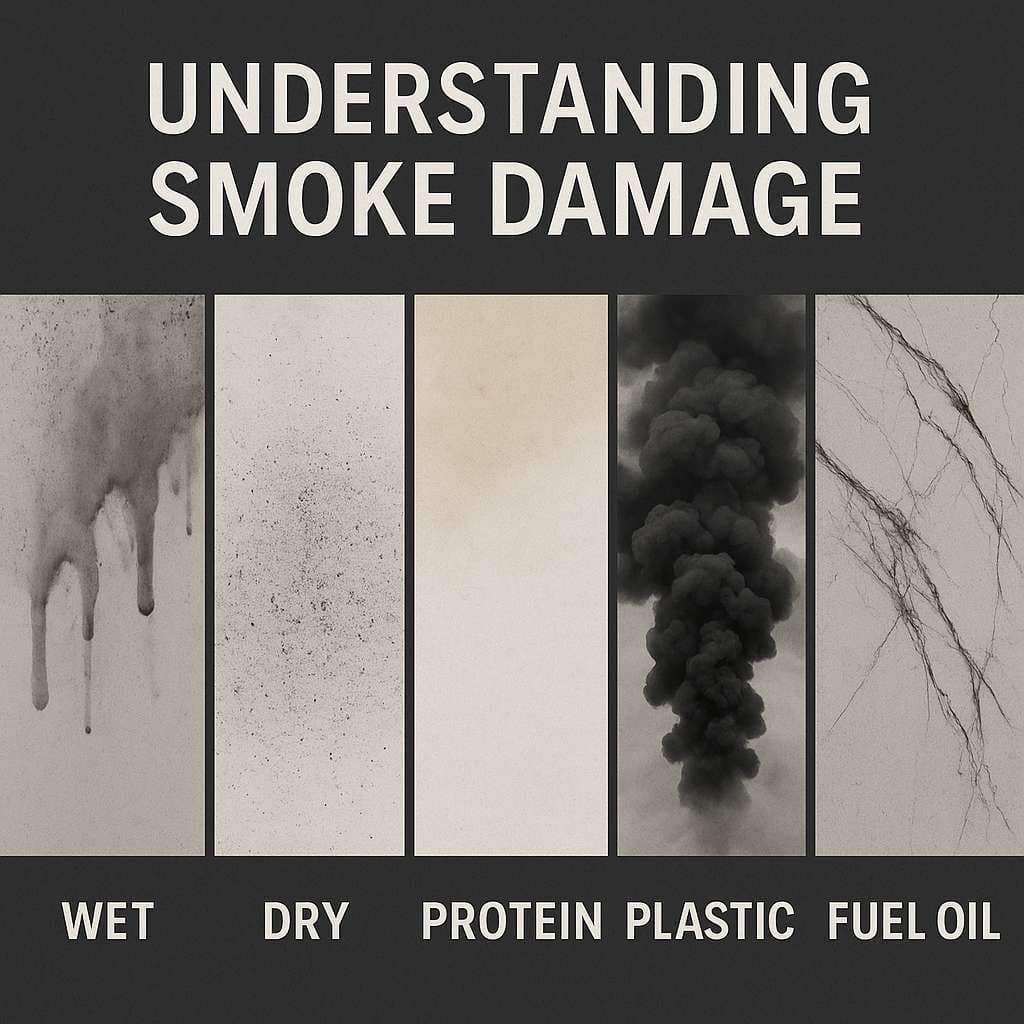
Produced by low-heat, smoldering fires burning plastics and rubber. Creates dark, greasy, pungent-smelling residue with a sticky consistency. Smears when wiped incorrectly, requiring specialized detergents and dry-cleaning methods before any wet cleaning. Often the most difficult smoke type to remediate.
Dry Smoke Damage
Produced by hot, fast-burning fires using natural fuels like wood and paper. Creates lighter, powdery soot ranging from grey to black. While easier to remove from surfaces than wet smoke, fine particles penetrate deeply into porous materials and must be HEPA-vacuumed before wet cleaning.
Protein Smoke Damage
Produced by kitchen fires burning food materials at high temperatures. Creates amber, yellow, or light brown residues that are nearly invisible to the eye but carry an extremely strong, rancid odour. Protein residues bond tightly to surfaces and require enzymatic cleaners and specialized deodorization protocols.
Plastic Smoke Damage
Produced by burning synthetic materials. Creates heavy, oily, black residue that is corrosive and may contain toxic compounds. Plastic residues cause rapid deterioration of metals, electronics, and finished surfaces. Professional containment is particularly important due to the toxicity of these residues.
Fuel Oil Smoke Damage (Puffbacks)
Oil furnace malfunctions called puffbacks distribute dark, sticky soot throughout homes via ductwork. Puffback residue is oily and difficult to clean from porous surfaces. HVAC system cleaning is mandatory as residue-coated ducts will continuously re-contaminate the building.
Why Professional Help Matters
Each smoke type requires tailored restoration chemistry, appropriate equipment, and proper containment protocols. Misidentifying the residue type and using incorrect cleaning methods can permanently damage surfaces and lock in odours. Professional assessment determines the correct approach from the start, protecting both your property and your health. Contact us for a free assessment.
Need professional help?
Our certified team is available 24/7 for emergency response and free consultations across Winnipeg and Manitoba.
Get Restoration Tips & Guides
Join Manitoba homeowners and property managers who receive our seasonal maintenance tips, restoration guides, and industry updates. No spam - unsubscribe anytime.
Related Articles
Why Fire and Smoke Odours Linger in Homes and Businesses, and What It Really Takes to Remove Them
Read Fire & Smoke DamageHow Professional Contents Restoration Protects Your Belongings After Fire or Water Damage
Read Fire & Smoke DamageWhat to Do Immediately After a Fire: Step-by-Step Fire Restoration Guide
Read