
Relief Restorations
Why Fire and Smoke Odours Linger in Homes and Businesses, and What It Really Takes to Remove Them
After a fire, smoke odours can persist long after the visible damage is repaired. Understanding why smoke embeds so deeply into building materials is the first step to eliminating it permanently.
The Hidden Problem After a Fire
After a fire, most attention goes to what you can see - damaged materials, soot, and needed repairs. What many homeowners and business owners do not expect is the smoke smell that lingers long after visible damage is cleaned. This is not a cosmetic issue - it is a sign of embedded chemical residues that require specialized treatment to remove.
What Smoke Is Actually Made Of
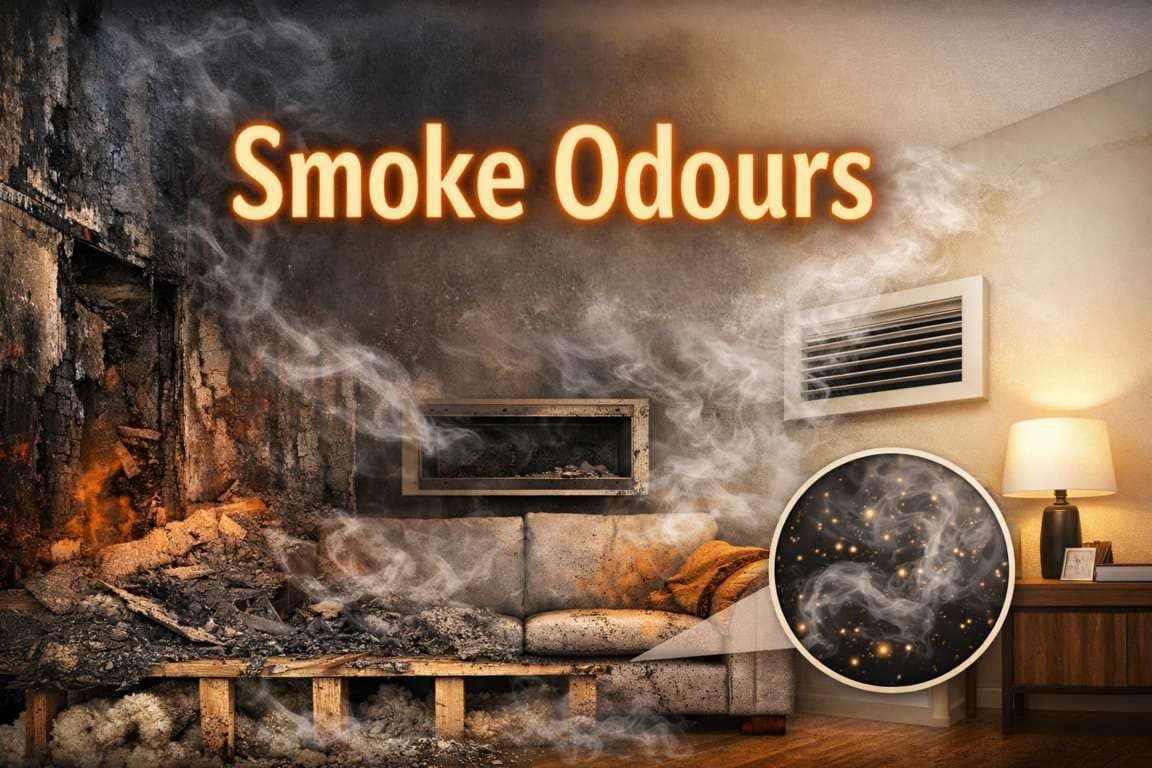
Smoke comprises microscopic particles, gases, and chemical residues from incomplete combustion. Synthetic materials like plastics, carpets, and foam furniture release particularly sticky, oily compounds during combustion. These compounds are extremely difficult to remove from porous building materials including drywall, wood, concrete, and fabric.
Why Smoke Odours Linger Long After the Fire Is Out
Smoke particles embed deeply rather than settling on surfaces. Heat during a fire drives smoke into wall cavities, insulation, subfloor materials, and HVAC ductwork. Once cooled, these particles bond to surfaces and remain trapped, reactivating and releasing gases during temperature or humidity changes.
Smoke Odours Are Not Just a Nuisance
Persistent smells can make rooms uncomfortable and contribute to headaches, throat irritation, and general discomfort. For children, seniors, or people with respiratory sensitivities, ongoing exposure to smoke residues poses genuine health concerns beyond simple odour.
Why DIY Cleaning and Air Fresheners Do Not Work
Surface cleaning cannot address smoke residues embedded in materials. Ventilation may move odours around rather than eliminate their source. Deodorizers and air fresheners only mask chemical compounds rather than neutralizing them, providing temporary relief while residues remain.
How Professionals Remove Smoke Odours Properly
Professional fire and smoke damage restoration involves detailed assessment to identify all contaminated materials, source removal of heavily affected building components, thorough cleaning with specialized chemistry appropriate to the residue type, HVAC system decontamination, and molecular-level odour neutralization using thermal fogging, hydroxyl generators, or ozone treatment in unoccupied spaces.
Why Smoke Odours Can Return If Steps Are Skipped
Incomplete remediation leaves residual contamination in hidden areas. Addressing only air treatment without removing contaminated materials typically results in recurring odours when temperature or humidity conditions change. All embedded sources must be removed or properly sealed.
When to Call a Professional for Smoke Odour Issues
Professional assessment is warranted when odours persist beyond initial cleaning, intensify when the HVAC system operates, return seasonally, or seem to emanate from walls, ceilings, vents, or furnishings. Contact Relief Restorations for a professional assessment and comprehensive fire and smoke damage restoration plan.
Need professional help?
Our certified team is available 24/7 for emergency response and free consultations across Winnipeg and Manitoba.
Get Restoration Tips & Guides
Join Manitoba homeowners and property managers who receive our seasonal maintenance tips, restoration guides, and industry updates. No spam - unsubscribe anytime.
Related Articles
How Professional Contents Restoration Protects Your Belongings After Fire or Water Damage
Read Fire & Smoke DamageWhat to Do Immediately After a Fire: Step-by-Step Fire Restoration Guide
Read Fire & Smoke DamageFire Prevention Tips for Winnipeg and Canadian Homes: Seasonal Guide
Read